Vegan Lo Mein
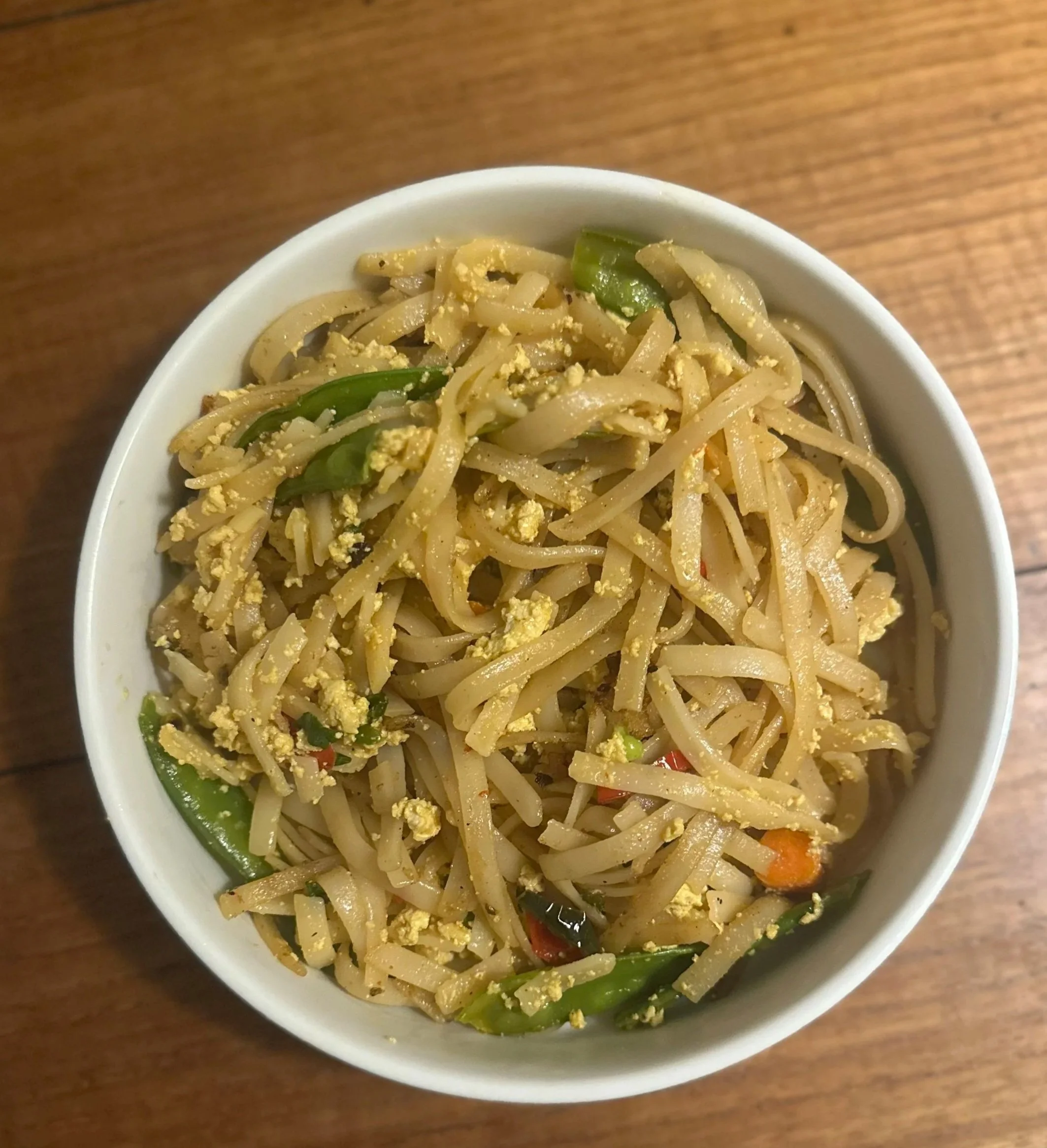
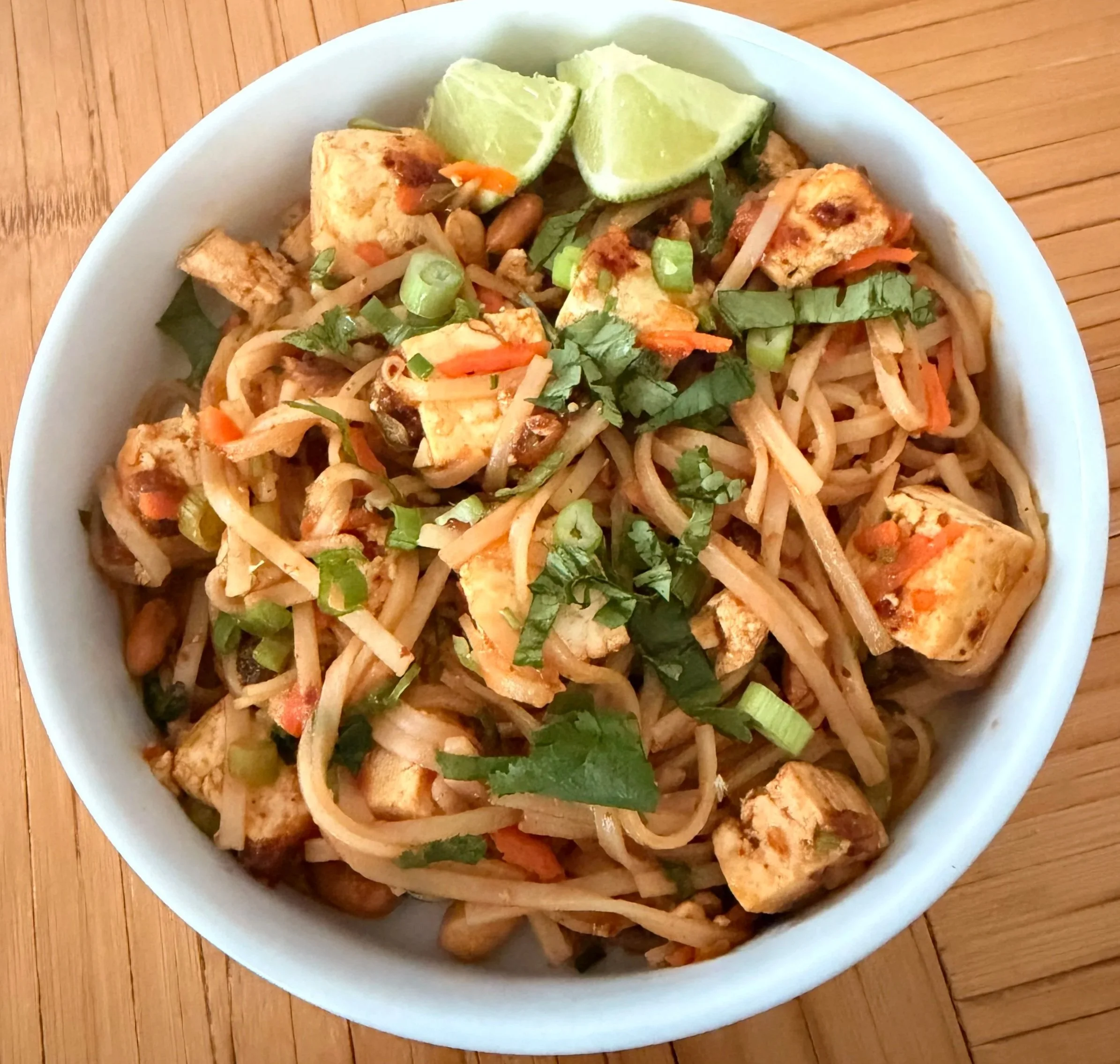
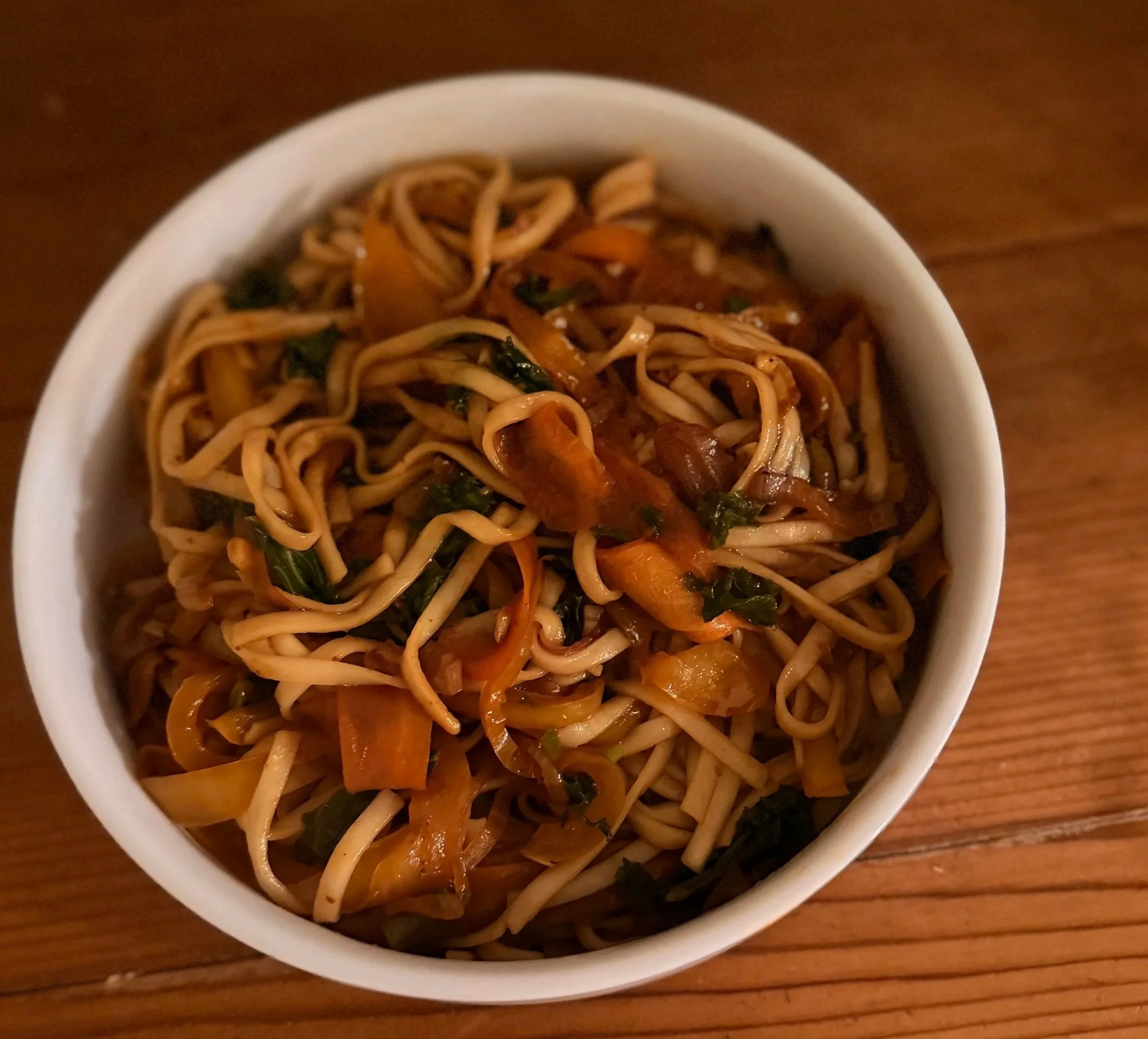
There’s something about lo mein that always feels like the ultimate comfort food: glossy noodles, a savory-sweet sauce, and that irresistible mix of veggies that somehow tastes even better the next day. It’s the kind of meal that instantly gives “Friday night takeout” energy — except this version is completely vegan, made with simple ingredients, and comes together in under 30 minutes.
This vegan lo mein is built around a few of my favorite flavor boosters: sautéed shallots, plenty of garlic, and a punch of Korean chili flakes (gochugaru) for gentle heat. The sauce is soy-based, balanced with maple syrup for sweetness and rice wine vinegar for brightness. It’s bold, but not heavy — the kind of sauce that clings to every strand of noodle without feeling overly salty or sticky.
For the vegetables, I kept things colorful and texture-forward. Ribbed and chopped kale adds that slightly chewy bite that holds up beautifully in a hot pan, while red bell pepper brings sweetness and crunch. The carrot ribbons are the finishing touch — they soften just enough to turn silky but still keep their shape, which makes the whole dish feel a little elevated without adding any extra effort.
This is one of those recipes that’s perfect for weeknights when you want something satisfying but don’t want a long ingredient list or a sink full of dishes. It’s also incredibly flexible: add tofu for extra protein, swap in mushrooms if you have them, or use whatever noodles you already have in your pantry. The base flavors stay the same — savory, a little sweet, a little spicy, and completely addictive.
If you’re craving a cozy, restaurant-style noodle bowl that’s plant-based and packed with vegetables, this vegan lo mein is going to become a repeat recipe.
Vegan Lo Mein
Serves: 2–3
Time: 20–25 minutes
Ingredients
Noodles + Veg
8 oz lo mein noodles (or spaghetti / ramen noodles)
2 tablespoons neutral oil (avocado, grapeseed, etc.)
1 large shallot, thinly sliced
4 cloves garlic, minced
1 red bell pepper, thinly sliced
2 medium carrots, shaved into ribbons (use a peeler)
2 cups kale, ribbed and chopped
3–4 green onions, sliced (white + green parts separated)
Sauce
1/4 cup soy sauce (or tamari)
2 tablespoons maple syrup
1 tablespoon rice wine vinegar
1 tablespoon toasted sesame oil
1–2 teaspoons Korean chili flakes (gochugaru), to taste
1 tablespoon water (optional, to loosen)
Instructions
Cook the noodles
Cook noodles according to package directions. Drain, rinse briefly with cool water, and toss with a tiny drizzle of oil so they don’t stick.Make the sauce
In a small bowl, whisk together soy sauce, maple syrup, rice wine vinegar, sesame oil, and gochugaru. Add a splash of water if you want it a little lighter.Sauté aromatics
Heat oil in a large skillet or wok over medium-high heat. Add sliced shallots and the white parts of the green onions. Cook 2–3 minutes until softened and lightly golden.Add garlic + veggies
Add garlic (and ginger if using) and cook 30 seconds until fragrant.
Add bell pepper and kale. Stir-fry 2–3 minutes until the kale starts to wilt.Add carrots + noodles
Add carrot ribbons and cook 1 minute (they should stay silky, not mushy).
Add noodles and pour the sauce over everything.Toss + finish
Toss well for 1–2 minutes until the noodles are glossy and everything is evenly coated.
Turn off heat and top with the green parts of the green onions.
Serving
Serve immediately with sesame seeds and an extra pinch of gochugaru on top. If you like it saucier, add 1–2 tablespoons water while tossing at the end.
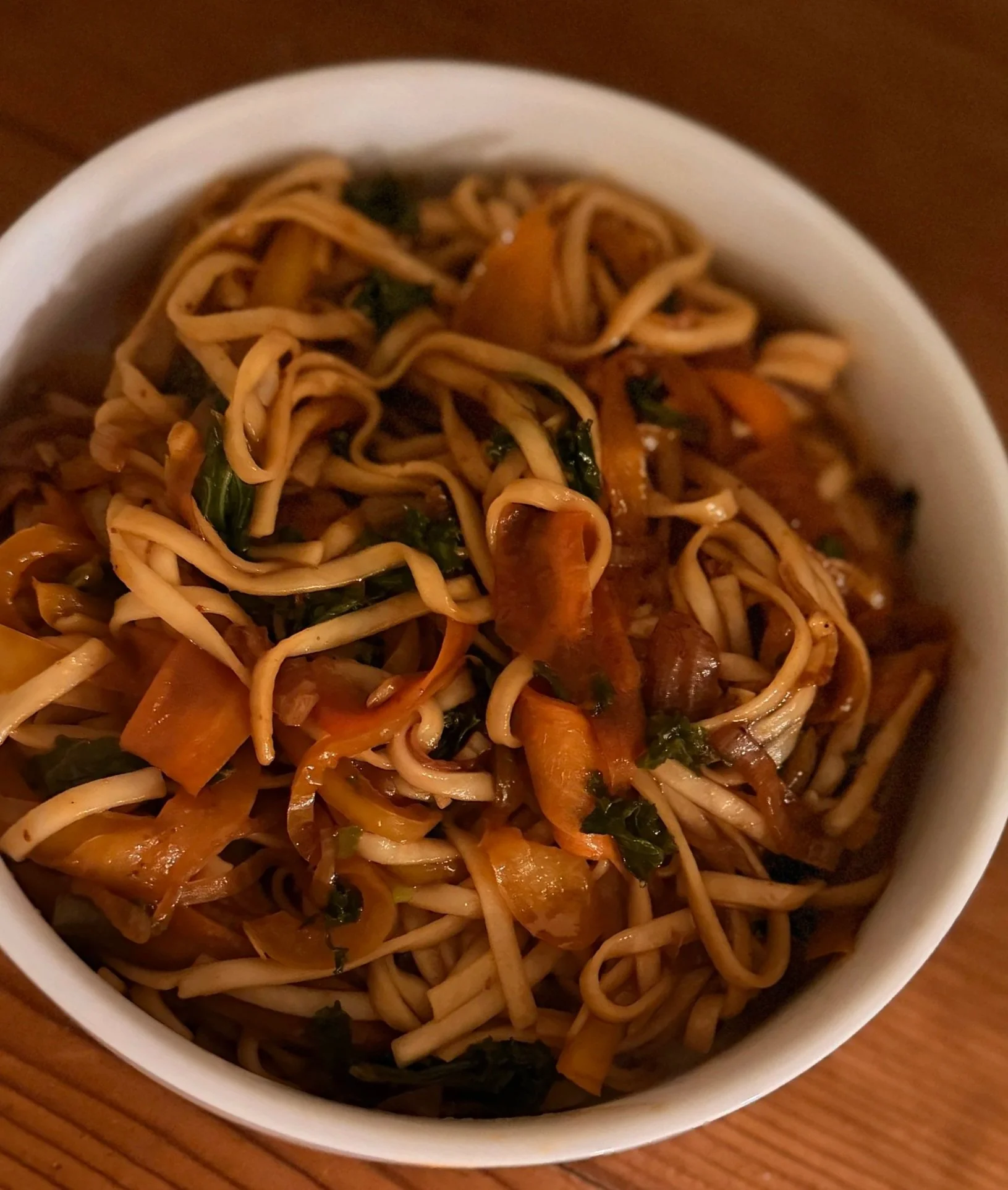
This vegan lo mein is a great example of how plant-based comfort food can still feel nourishing and balanced. While traditional lo mein is often heavy on oil and sodium, this homemade version gives you full control over the ingredients while keeping the same satisfying, savory flavor.
The base of the dish is packed with colorful vegetables like kale, red bell pepper, and carrots. Kale brings fiber, iron, and vitamins A, C, and K, while carrots and red peppers add antioxidants like beta-carotene and vitamin C to support immune health and overall wellness. Using carrot ribbons also adds volume and texture, making the dish feel hearty without relying on excess fat.
The sauce is soy-based for umami and depth, balanced with maple syrup and rice wine vinegar for a sweet-and-tangy finish. Even with a touch of sweetness, it’s still a lighter alternative to many restaurant sauces, which often include refined sugar and thicker additives. Korean chili flakes (gochugaru) add gentle heat, which can support circulation and make the flavors feel brighter without needing extra salt.
Overall, this recipe is a satisfying, plant-forward meal that delivers fiber, nutrients, and big flavor — perfect for a weeknight dinner that feels cozy, energizing, and wholesome.